Independent health news for Oregon and SW Washington

Sean Murphy picked for top job at Oregon State Hospital

Murphy, a top Washington state behavioral health official, has agreed to take over as superintendent of the state psychiatric institution, ending a period of more than two years in which the hospital lacked a permanent leader
Image
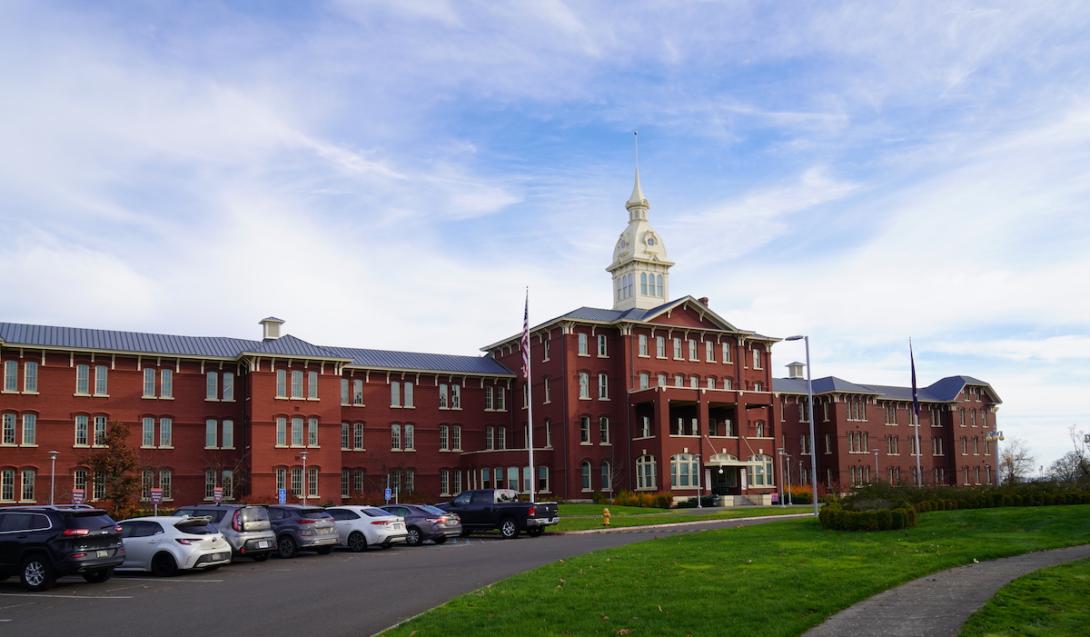
Oregon State Hospital in Salem, Oregon, on Nov. 21, 2023. | JAKE THOMAS/THE LUND REPORT
June 17, 2026

This article has updated been expanded since this morning to include an official announcement of Murphy's hiring issued Wednesday afternoon.

After two years of failed recruitment efforts, Gov. Tina Kotek and the Oregon Health Authority have found someone to lead the state’s troubled psychiatric hospital. Sean Murphy, a top leader of Washington state’s Behavioral Health Administration, has agreed to take over as superintendent of the Oregon State Hospital, The Lund Report has learned.

Murphy has served as the deputy assistant secretary of the Washington State Department of Social and Health Services since last April. Prior to that, he served as the deputy secretary for the state’s corrections department. His earlier work includes serving as chief security officer and later deputy CEO at the Western State Hospital, one of the state’s two psychiatric hospitals.

Image
Sean Murphy, OSH Superintendent
COURTESY OF OREGON HEALTH AUTHORITY
Sean Murphy, superintendent of the Oregon State Hospital

“I look forward to the opportunity to come help lead an organization that has complex challenges,” Murphy told The Lund Report when reached by phone this morning. “I look forward to supporting the team, the patients and Oregon as they continue to evolve their behavioral health system.”​

The hospital hasn’t had a permanent superintendent since then-Superintendent Dolly Matteucci resigned in March 2024. Three previous recruitments, including nationwide searches, failed, apparently because finalists were not deemed qualified or those offered the job declined.

In an announcement of the hire issued by the state subsequent to this artic, Dr. Sejal Hathi, executive director of the Oregon Health Authority, praised Murphy while citing his experience in behavioral health, operations and public safety.  

“Sean is a collaborative and results-driven leader who has the experience to continue the momentum gained by current leadership in creating lasting change at OSH,” Hathi said. “He shares OHA’s vision for OSH: delivering safe, compassionate, patient-centered care while building a high-performing organization positioned to meet Oregon’s behavioral health needs.”

In the announcement, Murphy said he was  honored to join the state hospital. "Together, we will build on the hospital’s strengths, support our workforce, and continue improving outcomes for the people we serve.”

With facilities in Salem and Junction City, the Oregon State Hospital operates about 700 beds for residential mental health treatment. It has been dogged by a history of safety concerns for both patients and staff, as well as staffing and morale issues and capacity challenges, while federal audits have repeatedly criticized Oregon Health Authority leaders for failing to establish a culture of safety at the institution.

Murphy's hire comes at a time when the Oregon Health Authority, which oversees the state hospital, is under newly heightened scrutiny of patient seclusion practices that surfaced following the death of a patient. 

Murphy will replace Jim Diegel, former executive with St. Charles Health System, who took the position on a six-month interim basis last May, then extended his time after the third superintendent recruitment effort failed late last year.

The previous interim superintendent, Dr. Sara Walker, was also the hospital’s chief medical officer. Kotek ousted her in April 2025 as federal investigators investigated the hospital, eventually issuing a report finding safety lapses and allegations that management retaliated against staff who raised safety concerns. Walker’s ouster prompted an outside monitor to express concern about a leadership vacuum at the hospital.

In the past year, the hospital’s leadership ranks have seen major turnover. The hospital has replaced its chief medical officer, chief of psychiatry, chief of nursing, assistant superintendent and now superintendent.

In the past, the state hospital used to admit roughly equal numbers of patients who were civilly committed or who’d been found unable to “aid and assist” in their own defense in a criminal trial. Today, however, nearly all of those admitted are criminal defendants in need of “restoration” services to help them be found competent to stand trial. However, demand for beds has exceeded supply, causing Oregon to repeatedly be fined for contempt of court for admission delays.

He previously oversaw Washington tate’s Behavioral Health and Habilitation Administration, which manages the state's residential psychiatric hospitals, forensic mental health systems, and specialized treatment facilities. The administration also manages the state’s adult forensic mental health care programs, providing competency evaluation and restoration services. In his current role, Murphy is overseeing the construction and maintenance of the new, 350-bed state hospital. 

In the announcement, Andy Mendenhall, president and chief executive officer of Central City Concern, called Murphy a seasoned leader who has a strong history of behavioral health system transformation. “The transformation journey for the Oregon State Hospital is one Murphy has successfully led within Washington. He clearly understands success at OSH is foundational for broader Behavioral Health systems change across Oregon."

Washington’s mental health system has been under federal court supervision, much as Oregon’s is. Last summer, Washington broke ground on a major $947 million expansion to its state hospital, expected to be completed in 2028. The new 350-bed forensic hospital will serve criminal court system patients who need mental health restoration treatment.

Murphy holds a bachelors degree in business administration, a master's in public administration from University of Washington and received an executive certificate in public leadership from Harvard Kennedy School Executive Education.

Correction: A previous edition of this story incorrectly stated the university for his master's degree, and his current role with Washington state. The Lund Report regrets the error. 

Comments