As providers, advocates and state officials scramble to prepare for new work requirements in the Medicaid-funded Oregon Health Plan and other federal changes that will slash health coverage, they hope that lessons learned from a very different crisis — the COVID pandemic — could be helpful.
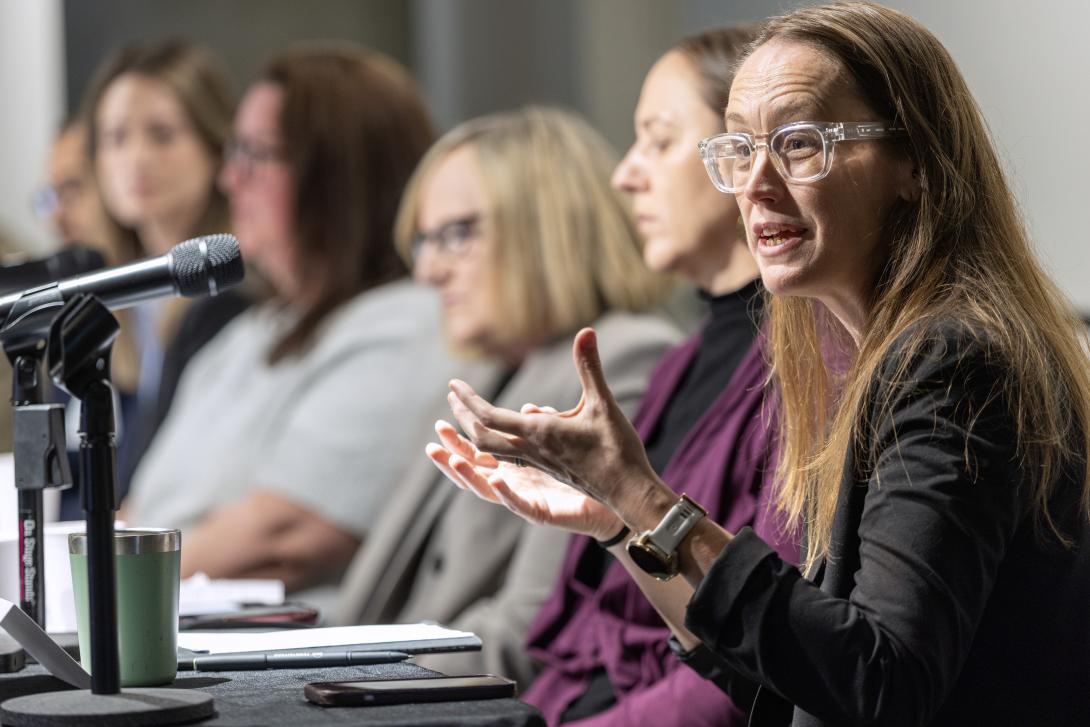
During the pandemic, nonprofits, health care organizations and government agencies worked together to respond to unprecedented challenges, and they should now come together in similar ways to keep as many people enrolled as possible despite the federal changes — while acknowledging they can’t do everything they want, said a panel of experts Tuesday at a discussion organized by the Oregon Health Forum.
“There was a lot of work that happened during COVID,” said Jennifer Griffith, CEO of One Community Health, a federally qualified health center that operates clinics on both sides of the Columbia River. “We demonstrated these partnerships can work.”
But she added, “Let’s not make the same mistakes that we did, because we all made mistakes as we went through that. It was new, and we were figuring it out. But we also did a lot of things right, and how do we build on what went right?”
The next big change to hit, in January, will be implementation of the Trump administration’s newly released rules that withhold Medicaid coverage unless applicants can prove they are either working, volunteering, attending school or are unable to work.
The Oregon Health Authority’s preliminary review of the just-released new rules suggests as many as 600,000 Oregonians may be affected by them — roughly 40 percent of all Oregonians on Medicaid, said Rachel Calloway, chief of staff for the agency’s Medicaid Division.
The big concern? That the hassle of applying — every six months under the new rules instead of every two years as it had been in Oregon — will lead to more and more people losing their coverage, even if they qualify. An estimated 200,000 Oregonians are expected to lose their Oregon Health Plan coverage as a result.
“These policies are designed to cut eligibility," Calloway said.
Panelists at the discussion, “The Medicaid Cliff: How Can We Cushion the Fall for Oregonians?” agreed that the problem is urgent, and people will be hurt by the changes. The panelists, who represent nonprofits and public agencies, said they are seeking ways to collaborate and share information across agencies and organizations. (The Oregon Health Forum is a sister organization to The Lund Report.)
The response to the pandemic helped forge partnerships and better communication, the panelists said, which could be helpful now. Notably, that work was aided by a lot of extra federal funding “to build those networks”, said Dr. Sarah Present, Clackamas County Health Officer. “We invested in community liaisons, we invested in community-based organizations convening, and we invested in bringing vaccines to people, and finding them where they were and what their needs were.”
Funding to respond isn’t there
The big difference now is a lack of funding, Calloway said, calling the situation “a challenging time, because, unlike COVID, we don’t have those extra resources.”
Medicaid is the health care insurance system for lower-income Americans that’s funded jointly by the federal government and the states, with the feds paying the larger share. Last year Republicans in Congress adopted House Resolution 1, known as HR 1, which is driving a lot of the changes now happening.
Under the new rules, which take effect Jan. 1, states like Oregon must adopt stricter rules to ensure that Medicaid recipients aged 19-64 work, volunteer, or attend school for 80 hours a month, or are exempt from the work requirement.
Meeting the challenge will require streamlining processes as well as working together to make sure people get needed help — especially in rural areas with limited resources, said Griffith, who oversees clinics in Hood River and The Dalles, Oregon, and White Salmon and Stevenson, Washington.
“None of us can do this alone,” she said. In conversations with partner organizations, the question is “How can we make this easier for patients, and how can we make sure we’re not duplicating efforts?”
To make things easier, some panelists and audience members said the state should be doing more to align the new rules for Medicaid enrollment with changes in other programs such as WIC, TANF and SNAP and their technology platforms — alignment of which has been a goal of Oregon officials for more than a decade.
“Oregon is working extremely hard to put in different systems requests to make sure that the systems are talking to each other,” Calloway said, adding that they are balancing a lack of agency capacity with a lack of federal flexibility.
With the impending changes to Medicaid, as well as the expected $400 million or so decline in the state’s General Fund that lawmakers use to fund the Oregon Health Plan, “it’s kind of an everywhere-everything-all-at-once sort of issue,” said Mindy Stadtlander, chief executive of Health Share of Oregon, the regional coordinated care organization that serves the Portland metro area.
“Getting clear about what we want to protect and preserve as we move through this time is absolutely critical,” she added. “We had the privilege of trying a lot of new things over the last 10 years. We have been in a position of growth and adding new benefits and innovating, and we’re probably in a time when we’re going to have to go back to some of the basics of what we did.”
State needs to keep providers informed
While the cuts resulting from the federal changes will be severe, it’s critical for providers to get a handle on just how severe they will be, panelists said. That means Salem shouldn’t wait to deliver bad news.
“The quicker that providers can find out what their rate cuts are, the better,” said Julie Ibrahim, chief executive of New Narrative, a mental health services nonprofit that also provides housing and peer support. “If we have to wait for rates to be announced, that’s too late … It may mean that we have to do some contraction, but that’s better than our organizations just blowing up because at the last minute we’re losing so much money.”
Among the changes: As a result of H.R. 1, some people who lack documentation will shift from the Oregon Health Plan to the Healthier Oregon Program, which receives no federal funding.
That’s a problem because increased federal immigration deportations are making people afraid to seek care, said one audience member, Britt Conroy of the Ecumenical Ministries of Oregon. He said more needs to be done in terms of screening to help immigrants stay on Medicaid, in which the federal government would cover the bulk of their care.
“We think about a third of [Healthier Oregon] participants, with the help of an attorney, actually could shift to Medicaid. That's a tremendous savings, helping people come out of the shadows and thrive,” he said.
He noted that H.R. 1 extended tax cuts for the wealthy, and “at the end of the day, Oregonians will suffer, will be sick longer, sick more often … and the suffering that we're about to see in Oregon is a direct result of that decision.”
The public still doesn’t know, advocates say
While people in the health care industry have seen damaging changes coming since H.R. 1 became law last July, “the average person doesn’t know what H.R. 1 did,” said Rep. Tawna Sanchez, who attended Tuesday’s discussion. “It’s bad policy. It’s a really bad policy and Oregon is trying to do our best to sort of mitigate a lot of the problems that are going to come from that.” In the meantime, she said, “You should be having those conversations in your community.”
Griffith and other panelists agreed that telling stories to new audiences is crucial. “Advocacy is part of our job,” she said. “I think we have a real opportunity here to engage the patients that we serve to help us elevate the severity of the problem …It’s the story of, what does this mean for my child who won’t be able to get their medication and won’t be able to go to school? Those are the stories that move people.”