Independent health news for Oregon and SW Washington

Oregon health officials scramble to meet deadline on Medicaid work rules

Having worked to get a jump on a looming January deadline, Oregon now faces a major setback in adjusting to new rules released this week. A group of governors led by Kotek is calling for more time
Image
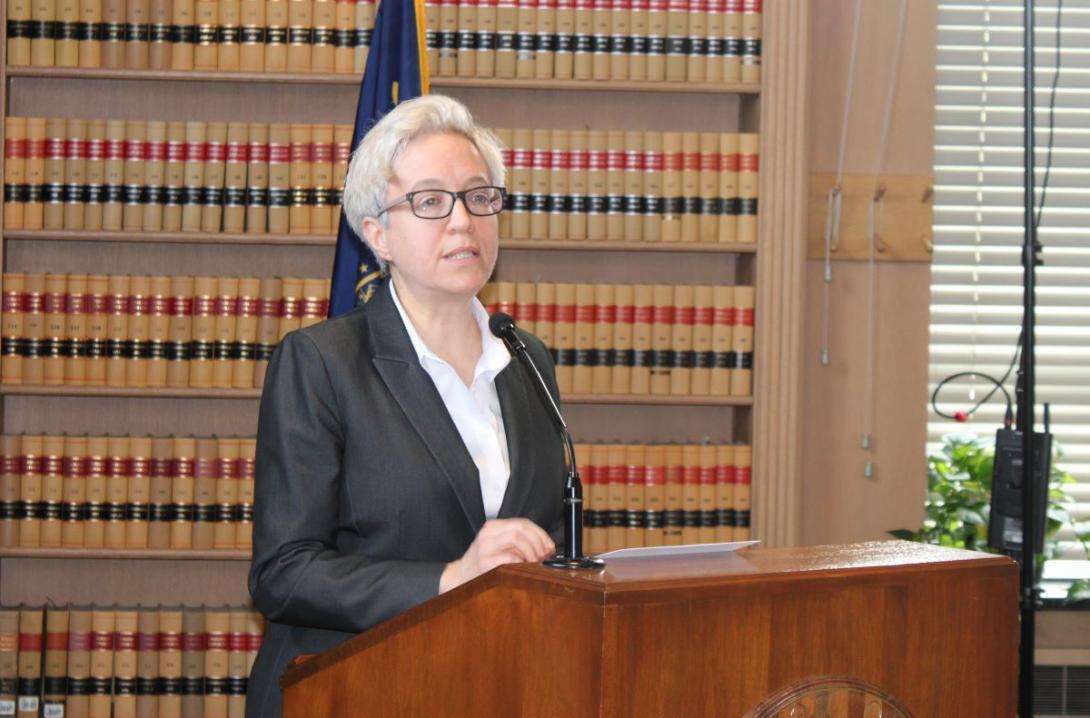
Gov. Tina Kotek speaks to reporters at a press event in April 2023 in Salem. | JAKE THOMAS/THE LUND REPORT
June 4, 2026

Oregon health officials are scrambling to make changes by January that could throw as many as 200,000 lower-income people off their coverage due to requirements that they show proof of a job.

While the new federal rules, released on June 1, were expected, their 400 pages contain a number of surprises, including changes that health officials and advocates say will make it even harder than was expected to help Oregonians get the health care they need.

States have only seven months, until Jan. 1, to have new IT  systems up and running to ensure compliance with the new rules. But a group of Democratic governors led by Oregon Gov. Tina Kotek has said that’s not enough time.

“States are being asked to carry out a complicated federal mandate without clear rules, without enough time, and with the risk that eligible people lose health care because of paperwork problems and system failures,” Kotek said in a statement. “The Trump Administration created this chaos, and states are now being left to manage the consequences.”

​​On May 29 — three days before the rules were released — Kotek, along with governors from Michigan, Washington, New York, Maine, and New Mexico, sent a letter to U.S. Health and Human Services Secretary Robert F. Kennedy Jr., warning that the time left to complete the changes creates an “unworkable rollout,” and called for more flexibility from the administration.

Under the new work requirements, states with expanded Medicaid coverage, including Oregon, must verify that certain adults between ages 19 and 64 are working, doing community service or attending school for at least 80 hours a month. Some exemptions apply, which also require frequent verification. Oregon is one of 40 states that expanded Medicaid coverage under the Affordable Care Act to extend insurance to people who otherwise might not be covered.

​Like many states, Oregon had already begun making some operational changes to get a jump on the Jan. 1 deadline well before the June 1 release of the rules.

In a statement to The Lund Report, the Oregon Health Authority said the new rules differ significantly from the guidance the state had been operating under.

“This may cause us to rework and reprogram a number of our IT systems, setting our implementation progress back,” according to the statement.

​This was what Kotek and the other governors warned about in their May 29 letter to Kennedy.

​The governors warned that any major changes to federal guidance issued previously would be a problem, given the short time frame.

“While Congress set an ambitious implementation timeline, our states have been prepared to take every possible step to meet it,” the letter states. “To that end, states have built out IT systems, drafted member communications, and developed the guidance and policies necessary to implement these requirements.”

The Trump administration has not replied to the governors’ letter, according to the governor’s office.

In Oregon, 1.4 million people rely on the Medicaid-funded Oregon Health Plan for their health care coverage, including half of all children. Most health plan members who are able already work, say state health officials.

The new requirements could mean nearly half a million members will have to fill out paperwork every six months to prove they qualify, which officials say could cause an estimated 200,000 Oregonians to lose their insuranc — not because they’re not eligible, but because of the paperwork.

Currently, Oregon Health Plan members ages six and older are covered for two years at a time, without the need to renew. State health officials say that has helped keep people covered.

Processing those eligibility requirements every six months is expected to significantly increase the workload for eligibility workers.

​“Forcing people through more paperwork and lengthy processes produces unnecessary churn on and off Medicaid and raises administrative costs for providers, individuals, and the state,” according to the health authority’s statement.

Oregon has just over 1,600 eligibility workers who help people in Oregon with a variety of benefits. A spokesperson with the health authority said the state has added funding for 392 new positions to handle the additional workload associated with the work requirement rules.

One significant change in the new rules is the definition of medically frail, a condition that means someone doesn’t have to meet the work requirements. As passed by Congress in  H.R. 1, medically frail conditions are defined as blindness or a disability; substance use disorder; disabling mental disorder, physical, intellectual, or developmental disabilities; and serious or complex medical conditions.

The new rules released Monday, however, tie medical frailty to a person’s ability, or inability, to meet the work requirements. A person who meets the work requirements cannot be considered medically frail. States will have to determine if a person’s condition is severe enough to exempt them from the requirement.

​A group of 48 nonprofit health advocacy organizations, including the ALS Foundation, American Cancer Society, and National Alliance on Mental Illness, has issued a statement saying not only will the new medical frailty rule mean people with complex health conditions will fall through the cracks, but that it is a violation of H.R.1.

​That change, analysts say, will mean fewer people will meet this exemption, even though their condition may make them unable to meet the work requirement and cause them to lose health insurance coverage. It will also mean substantially more red tape for both the state and the individual.

Comments