

This year, Oregon lawmakers passed two bills that established, for the first time, laws that called for the creation of Oregon’s first-ever, comprehensive statewide strategy to equip vulnerable youth with the tools they need to fight addiction later in life.
This didn’t mean just the old-fashioned “scare them straight” messages that used to be taught in the name of prevention by uniformed police officers in school. It meant research-backed approaches, the kind that boost self-esteem, problem-solving and social skills to help students engage with their world.
Last year at The Lund Report, we spearheaded a six-month project with the University of Oregon Catalyst Journalism Project and Oregon Public Broadcasting to highlight research into effective prevention work. That included a survey of public school districts’ offerings, finding that most did not appear to be complying with state law on prevention.
At the time, the reporting prompted vows to take action by state lawmakers and Gov. Tina Kotek. So in July of this year, nearly a year and a half after we published, it was gratifying to get a text message from prevention advocate Jon Epstein. He shared the notices showing Gov. Tina Kotek had signed the bills into law, adding:
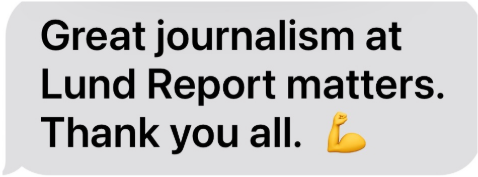
To me this story is about how the impact of good journalism may not be immediate. But it’s also a story about how good journalism does have an impact.
It’s not a coincidence that I’m telling you about this as we enter our crucial end-of-the-year fundraising drive. We are less than halfway to our goal. If you can, please consider a gift to help keep our journalism going.
Our job at The Lund Report is to use high-quality journalism to provide the public with the best quality information possible, thus equipping people to make positive change. Earlier this year, our larger-than-life founder, journalist Diane Lund — who’d spent her career prying open closed doors to tell people what’s really happening — passed away. But this work will continue.
We think it’s incredibly important, and feel deep gratitude for the help we receive from our highly informed and engaged readers and supporters. Without it, this work would not happen.
Solutions highlighted
The Lund Report is not an advocacy organization. We have no editorial board, and we took no position on the prevention bills that passed this year.
But we on the news team were proud that the project we spearheaded included exhaustive reporting that spotlighted not just the problems, but potential responses. It showed that in contrast to Oregon, which did little to connect school districts with appropriate resources, other states were taking different approaches that had led to reports of measurable improvements.
The laws passed this year seemed to mirror those approaches.
Real impacts
Managing Editor Emily Green, who spearheaded both projects with laser focus, interviewed one high school teacher, Zach Lazar, who in the span of two years had seen three students die due to drug use.
She talked to Pam Pearce, a prominent prevention educator, who called Oregon’s situation a “free for all” in terms of the guidance and mentorship kids received in school to help them stay alive.
Green talked to experts, and she worked with reporter Elizabeth Yost to survey school districts across the state, creating a data portal to let readers find out what was happening in their communities.
Green also talked to Epstein, who lost his son to an accidental fentanyl poisoning in 2020, prompting his advocacy.
He told me recently that passage of the laws was a team effort and followed the Legislature’s passage of a fentanyl awareness law in 2023.
But he said he could see the impact of The Lund Report when he set out to push things further in 2024 and 2025. When he’d cite our investigative findings to lawmakers, they’d often indicate they’d read them already and understood the implications.
It was easier for people to “recognize the issue as real after reading such high-quality journalism,” he said, adding that the Lund Report’s reporting helped “change the conversation” and was a “catalyst” for the two bills’ momentum.
The media environment today, he added, is dominated by “quick-hitter catchy headlines, not a lot of depth … But The Lund Report goes deep, asks questions [and] connects the dots … helping people get to better solutions.”
The health of our youth and health care in general are just two of the many areas today where our society and our country face major challenges. But they touch all of our lives.
At a time when access to care and the systems that deliver services are changing rapidly, we will continue to bear witness to what is happening and what it means for communities. And we will continue to evolve to do so more effectively, so please keep sharing with us your thoughts and ideas.
Thank you for reading and for your support.
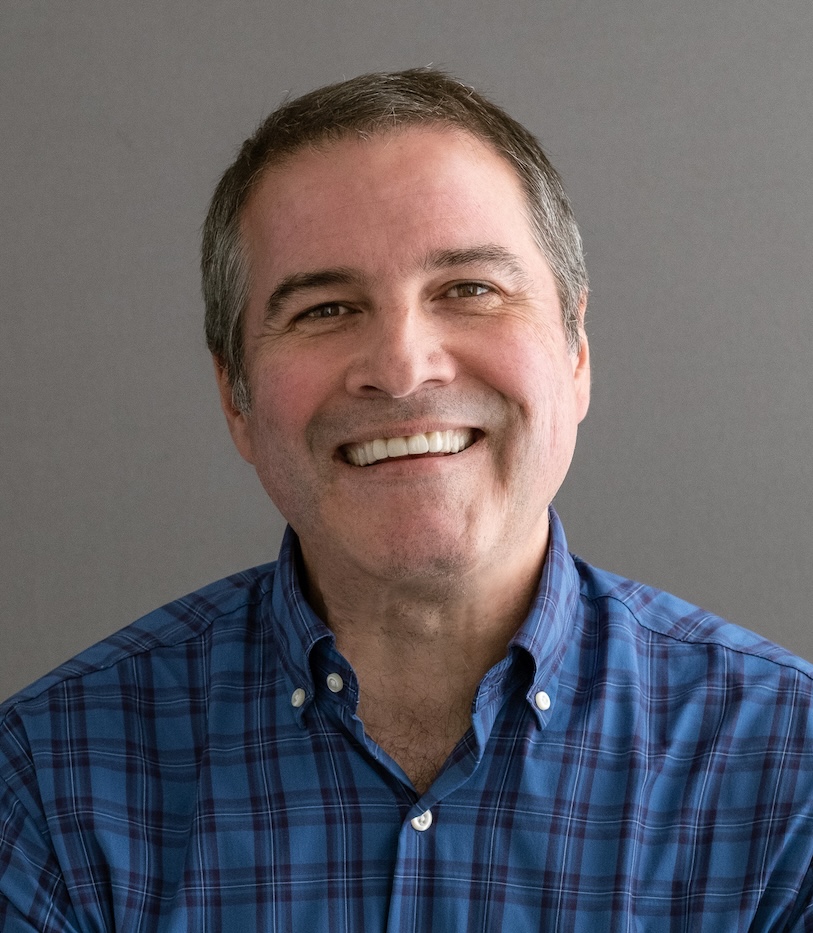
Nick Budnick is the Editor in Chief for The Lund Report.