
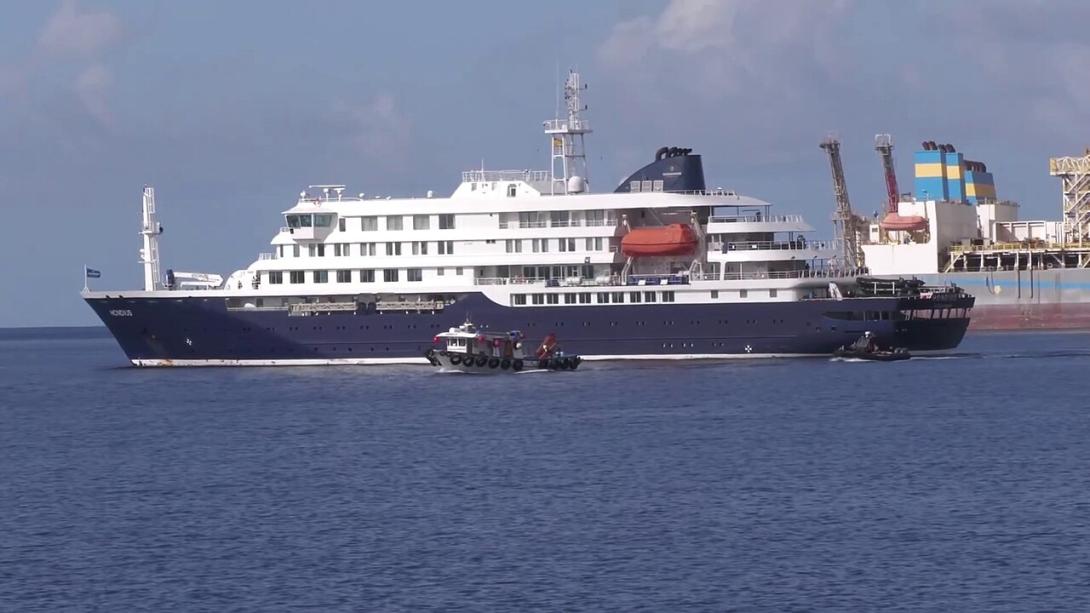
Three King County residents may have been exposed to the hantavirus that has killed and sickened passengers aboard the MV Hondius cruise ship.
One resident is currently quarantined with other Americans in Nebraska. Another two exposed King County residents have returned home and are isolating. Public Health — Seattle & King County officials said Tuesday that the risk to the public remains low.
"Even though these individuals do not show signs of illness, we have strong contact tracing and monitoring in place," Dr. Sandra J. Valenciano, acting director of Public Health — Seattle & King County, said in a statement. "These are measures that have contained the spread in previous outbreaks of hantavirus. The risk of this virus spreading to residents of King County is low at this time."
The hantavirus outbreak on the MV Hondius has killed three passengers and sickened at least five others, according to the World Health Organization.
None of the three King County residents have tested positive for the hantavirus or showed signs of illness so far, according to health officials. There are currently no active cases of the virus within the county.
One of the King County residents was aboard the MV Hondius ship, but county health officials say that person remains asymptomatic. They are being monitored along with 15 other Americans at the national quarantine center at the University of Nebraska Medical Center in Omaha.
During a media briefing Tuesday, Valenciano told reporters she didn't know when this person would be allowed to return to King County.
The other two King County residents were potentially exposed to the virus on a flight from South Africa to Amsterdam when they sat "within two seats" of a passenger from the cruise ship who had become ill, Valenciano said. That ill passenger was on the plane for about an hour, but was removed before takeoff. That person later tested positive for the virus.
Both residents have now returned to their shared home in King County. They remain asymptomatic and are monitoring for symptoms at home in coordination with the health department.
The residents have been "very cooperative," Valenciano said, and are limiting any non-essential activities outside of their home. If they must go out, health officials have instructed them to wear a well-fitting respirator or mask. Other public health protocols include daily temperature checks and symptom assessments with public health officials.
Valenciano acknowledged that the current news about hantavirus is "scary," and "may bring back memories" from the Covid-19 pandemic. But she stressed that the hantavirus is a "very different situation."
"When Covid-19 emerged, it was a novel virus — one that had not been seen before, and there was so much we did not know," Valenciano said. "In contrast, we have decades of information about hantavirus since disease surveillance began in the 1990s."
Valenciano also emphasized that while hantavirus can cause severe illness, it is rare. Most types of hantavirus — including those found in Washington state and the United States — don't spread from person to person. Instead, it's primarily spread from contact with wild rodents, specifically their urine, droppings, and saliva.
The Andes type of hantavirus that spread on MV Hondius, however, can be spread between people through close contact.
"That's why we're monitoring the travelers who returned," Valenciana said.
But person-to-person transmission is also rare — according to King County health officials, spread of the Andes virus typically requires "prolonged, close contact" with an infected person, such as direct physical contact, prolonged time in close or enclosed spaces, and exposure to the person's saliva, respiratory secretions, or other bodily fluids.